





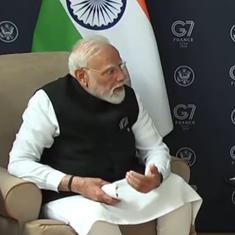

In April 2025, the Cabinet Committee on Political Affairs approved the enumeration of caste in the Decennial Census to be carried out in 2026-27. This was a surprising moment in Indian politics, especially because Prime Minister Narendra Modi and the BJP had been quite vocal and active in their opposition to a caste census. Modi had himself, during the 2024 election campaign, stridently proclaimed that there were four big castes for him: women, youth, farmers and the poor. Caste censuses carried out by states such as Karnataka and Bihar (where the BJP was in alliance with the JDU) were either pilloried or addressed with a studious silence.
This complete flip in both ideology and policy seemed to catch most people off guard. Did the BJP finally succumb to political pressure? Or was it simply a move to appropriate an emancipatory demand and blunt its radical edge in the process? Anand Teltumbde was one of the first to argue in an article that the caste census would become a tool of division and reinforce, not annihilate, caste. The Caste Con Census is an elaboration on the article, and a measured and scholarly contribution to the debate surrounding the caste census.
The book, written in an accessible and lucid manner, can be divided into three parts. The first part charts the history of caste, from a relatively fluid mode of social organisation to its hardening and crystallisation in the period of British rule. The second part presents Teltumbde’s own arguments against the caste census. The final part is concerned with his desire to reform the currently existing reservation system through an innovative and equitable framework that would ensure the benefits of the reservation pass on to everyone and do not remain concentrated in a few subsections of the oppressed castes.
Sanctified by religion, sustained by custom
In the first part of the book, Teltumbde draws on various scholarly and historical sources to construct a genealogy of caste going back thousands of years. What is important for his argument is that “the roots of caste-like practices lay in pre-existing tribal social formations”. These were gradually appropriated by Brahminism, which placed them within a conceptual and theological structure which was deeply set and enduring despite changes in political and social conditions. This process, which was slow and not entirely uncontested from below, led to caste becoming the “organising principle of Indian civilisation, sanctified by religion and sustained by custom”.
Teltumbde’s argument here is that caste might be sanctified by religious law, but it is not religious ideology which is the basis for its endurance. This is reflected in his critique of Ambedkar’s spiritual turn, which “potentially deflected attention from the stronger forces of political economy”. Counter-religious movements like Buddhism, the Bhakti movements and even feudal Islam, Teltumbde argues, could not break the stranglehold of caste. Caste, by being embedded in material practices as well as ideological systems, could not be annihilated by a change in religious thought. The long period of Islamic rule, as well as the religious movements of Bhakti and Sufism, could not make much of a dent in its functioning, as they did not attempt to transform relations of “landholding, labour relations and political power”. For Teltumbde, the annihilation of caste therefore requires much more than just symbolic change, which is an important part of his larger argument against the BJP-led caste census.
It was during the British period that caste crystallised into a much more solid and stable structure. Whereas earlier caste identities were somewhat mutable and individual castes could climb up or down the ladder, colonisation froze caste into place through the process of enumeration and bureaucratic intervention. Teltumbde writes: “Colonial enumeration transformed caste from a local, relational structure into a politicised and standardised identity, creating a feedback loop between colonial classification and indigenous assertion”. Through the enumeration of caste, the British allowed it to become a space of political assertion; caste associations came into being that sought to solidify their identities through the construction of various myths to demonstrate their belonging to the Kshatriya or Brahmin castes. This allowed the British to create divisions that would resist belonging to a unified national movement.
Similarly, with the exit of the British, the Indian constitutional state continued this bureaucratic focus on caste by rewriting it as an instrument of social policy. The annihilation of caste as envisioned by Ambedkar was substituted by what Teltumbde calls “a pragmatic logic of state-administered justice via caste based reservation”. With this bureaucratic enshrinement of caste as central to the Indian state’s social and public policy, caste became “immutable” and then, as Teltumbde writes, “the only feasible path to justice is greater caste-based differentiation”. This is the logic that undergirds even the demand for sub-classification of Scheduled Castes (which the Supreme Court allowed recently) as well as the caste census.
Teltumbde’s argument against the caste census, which is detailed and extends across multiple chapters, can be helpfully summarised by the following broad points:
Enumerating caste has historically been an act which leads to the solidification of caste and not its annihilation.
The Indian state, from its very beginning, never wanted to abolish caste but preserve it as either a tool for electoral manipulation or for designing governmental measures.
The BJP, as an ideological Hindu supremacist party, cannot be trusted with the caste census because of its historical denial of caste justice as well as its well-documented predilection for data manipulation.
The caste census is therefore being set up for failure; in being shown to have failed, it will justify the abolishing of caste based reservations in favour of economically designed affirmative action.
The BJP will use the caste census data for symbolic inclusion, not systemic reform.
And finally, the very logic that underwrites the caste census should be resisted; caste based reservations are not the answer, but the real goal should be the annihilation of cast,e which can only be made through the universalisation of the welfare state.
I wholeheartedly agree with Teltumbde on many of these points. However, I think the thicket of contradictions that he quite correctly points out when it comes to the caste census can be read differently. One of the issues I have with his argument is that he assumes that there must be a direct, straight path from the caste census to an emancipatory moment; if one can show that there is none, then the very idea of a caste census must be abandoned. However, I don’t think the historical events he himself charts out can sustain such a reading. History often takes a crooked path, and emancipatory possibilities are usually generated from situations in which they seem the least probable.
For example, the caste census conducted by the British in 1931 provided ammunition for caste-based mobilisation to push forward and achieve certain victories, which, even if incomplete, changed the political horizon of the country for the next century. Caste, which was a fluid and dynamic mode of social organisation, did crystallise, just like religion did a few decades earlier. Yet this led to the centrality of caste-based revolutionary politics in the country, of which the BJP’s contemporary rise can be seen to be a reactionary moment.
Larger consequences
I also agree with both Teltumbde and Kancha Ilaiah Shepherd that the caste census seems to be a large-scale deception, carried out in the same way and with perhaps the same intent as the recent Special Intensive Revisions of the electoral rolls in various states. Yet I think the con in the census is what we need to think through. Teltumbde’s fear is that in appropriating the radical call for caste-based enumeration made for many years by parties opposed to caste, the BJP might appear victorious and appease its base of middle and lower castes. It might conduct it either shoddily or maliciously, and thus manipulate data to make a case for the very abolition of the caste based system of reservation. The caste census could solidify caste and make it permanent through various governmental programmes in a symbolic rather than a systemic way. And finally, it may lead to the portrait of social suffering without any political will to assuage it. All of this is very likely to be true.
Yet, given all this, I still think the caste census is a good idea. Not because it will offer us a clear and direct window into India’s caste-based realities; not because it will allow the formulation of policy that will address caste-based suffering and discrimination; not because it will allow the Indian state to redesign the reservation system and perhaps increase the 50% cap. No, I think the caste census is a good idea precisely because its failure to do any of these things will facilitate a break with the current system that exists, and lay the groundwork for new contestations that are unimaginable at this moment.
Just like the SIR will quite certainly consolidate the BJP electorally, the caste census can allow them to brush caste under the rug. Yet this will not do away with the real problems affecting Indian society, but only offer a weak and mild palliative. Belief in democratic systems will suffer with every legitimate voter who is excluded from the rolls; the very fact that the JDU in Bihar had to promise Rs 10,000 to women voters shows how voters no longer want long-term ideological gains but, rather, short-term fixes. Faith in the ability of the electoral process transform lived reality seems to be at its lowest point, and the effects of the SIR might crystallise into new demands for electoral reform.
Similarly with the caste census, the static faith in the Indian government as having enshrined affirmative action policies at the core of its essence will also vanish. With this disappearance, there will necessarily be pressures to re-imagine caste-based affirmative action in ways that would never be possible within this existing system. I agree with Teltumbde’s innovative methodology to reform the reservation system by making it a weighted process that would take into account the amount of reservation benefits accruing to an individual’s family. However, the calculations may well open up a bureaucratic nightmare that is even worse than the one currently in force.
In conclusion, I agree with all the fears that Teltumbde has quite correctly pointed out regarding the caste census. It is certainly not what either Dalit intellectuals or the class of political scientists have been hoping for. But even though I agree with his arguments, I believe that history shows that the effects of enumeration are multifold and complex.
In counting caste for their own purpose of colonial governance, the British unlocked emancipatory possibilities that were unimaginable before them. Yes, that required multiple actors to stake claim and contest the new field that was opened up; and yes, those effects took many decades to finally manifest. Yet, from the organising principle of Indian society, caste became the organising principle of Indian politics. Such a move from the implicit to the explicit laid the ground for resistance in new forms. It is my hope that the caste census, even if all of Teltumbde’s fears are true, will lay the ground for new modes of resistance as well as re-imaginings that may lead to the casteless society we were promised.
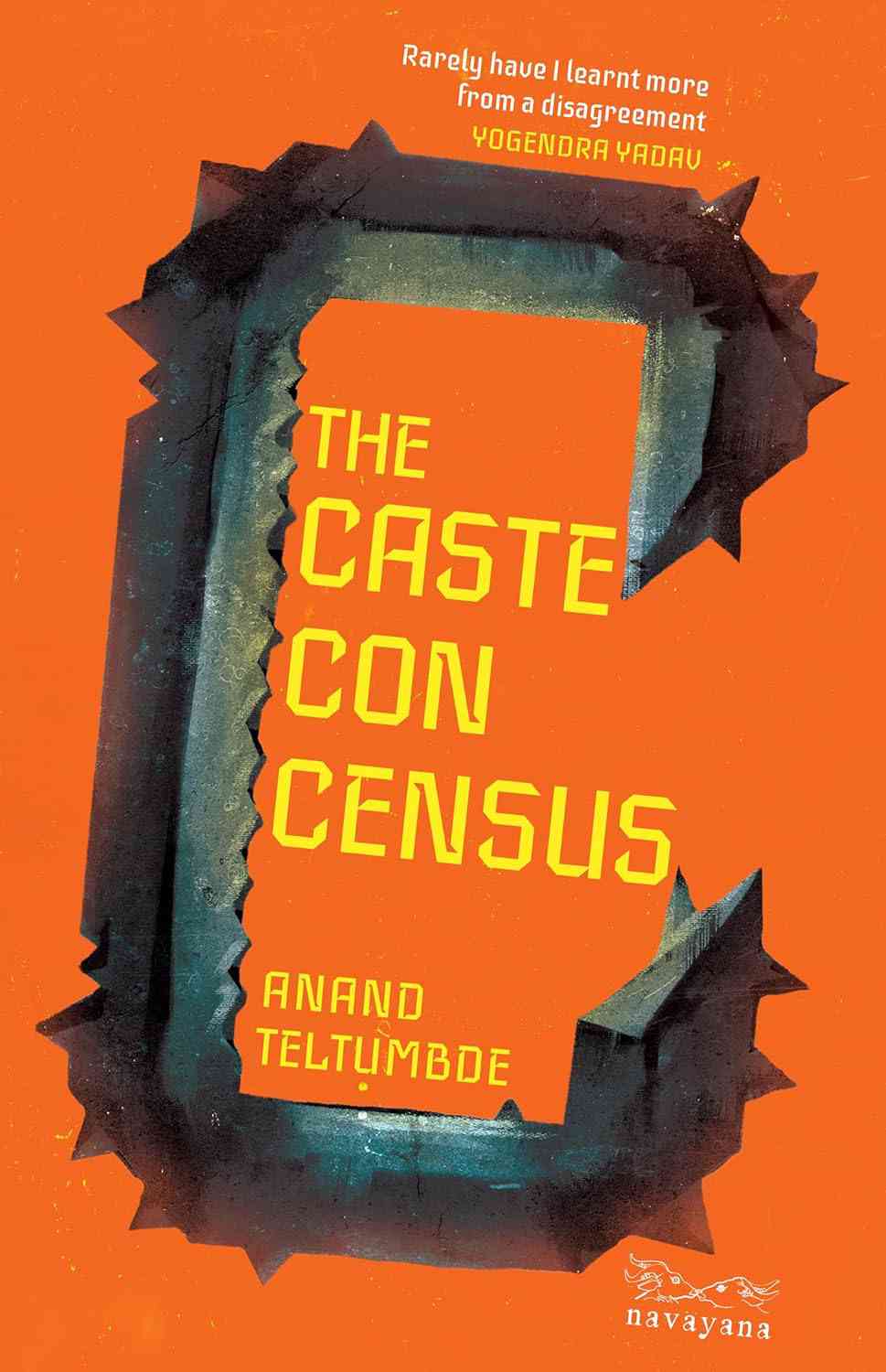
The Caste Con Census, Anand Teltumbde, Navayana Publishing.
